
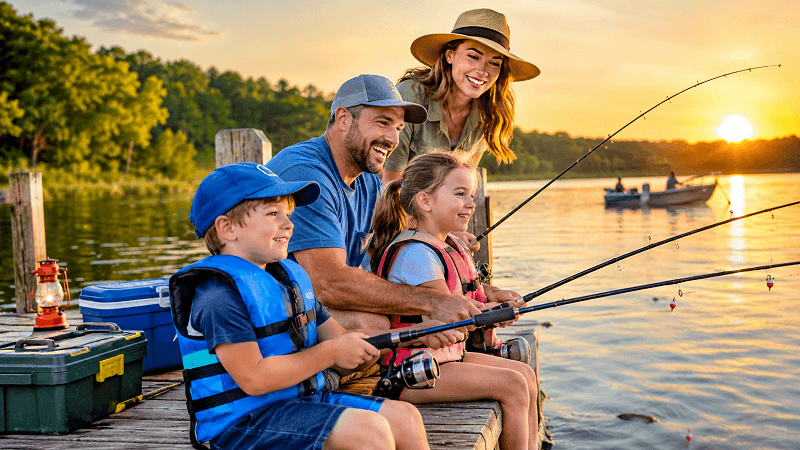
Fishing is more than simply catching fish. For families, it can be an opportunity to spend meaningful time together, explore the outdoors, learn new skills, and create memories that last for years. A well-planned fishing trip can give children their first experience with nature while helping parents and older family members enjoy a relaxing break from everyday routines.
At ThunderOnTheGulf, family fishing is closely connected with outdoor adventure, responsible recreation, and enjoying simple moments together. Whether your family is completely new to fishing or already spends weekends beside the water, the right preparation can make every trip more enjoyable.
This complete guide explains how to plan a successful family fishing trip, choose suitable equipment, keep children safe, teach basic fishing skills, stay comfortable, and encourage respect for nature.
Why Family Fishing Is Worth Trying
One of the biggest benefits of fishing is the quality time it creates. Phones, television, school, and work can easily fill a family’s daily schedule. Spending a few hours beside a lake, river, pond, or coastline provides an opportunity to slow down and concentrate on something together.
Fishing can also teach children patience. Fish do not always bite immediately, so young anglers learn that good results sometimes require waiting and paying attention. Children can also develop confidence when they learn to cast, hold a rod, reel in a fish, or release a catch properly.
Most importantly, the goal does not have to be catching the biggest fish. Many family fishing guides recommend focusing on the overall experience rather than measuring success only by the size or number of fish caught.
Choose the Right Fishing Location
Location can make or break a family fishing trip. Experienced anglers may enjoy remote areas, rough shorelines, strong currents, or challenging conditions, but these places are not necessarily appropriate for young children.
For a first trip, look for a location that offers:
- Easy access to the water
- Stable and relatively level ground
- A safe shoreline
- Plenty of space for casting
- Nearby shade or shelter
- Restroom facilities when possible
- Reliable fishing opportunities
- Other activities children can enjoy
A calm pond, small lake, managed fishing area, or family-friendly pier can often be a better starting point than a difficult fishing destination. Maine’s fisheries guidance similarly recommends simple shoreline locations and species that are easier for children to catch.
Before leaving home, check local fishing regulations. Requirements for licenses, permitted bait, fishing seasons, size limits, and catch limits vary by location.
Select Simple Fishing Equipment
Children do not need complicated equipment to enjoy fishing. In fact, oversized rods, heavy tackle, and complicated reels can make the experience frustrating.
Choose equipment that matches the child’s age, size, and ability. A lightweight rod and simple spinning or spincasting setup can be easier for a beginner to control. A bobber and relatively simple bait setup can also make it easier for children to recognize when a fish is biting.
The U.S. Fish & Wildlife Service lists basic fishing equipment such as a rod and reel, suitable fishing line, hooks, weights, bobbers, and permitted bait among the essentials for beginning anglers.
A basic family fishing kit may include:
- Lightweight children’s fishing rods
- Simple reels
- Appropriate fishing line
- Small hooks
- Bobbers
- Sinkers
- Suitable bait or lures
- Pliers for handling hooks
- A landing net
- Tackle storage
- Polarized or protective sunglasses
- Sunscreen
- Drinking water
- Snacks
- First-aid supplies
Keep sharp hooks and other tackle secured when they are not being used.
Teach Children Fishing Basics Before Casting
A little preparation at home can make the first trip much easier. Instead of teaching everything beside the water, introduce children to the basic parts of fishing beforehand.
Start by explaining what the rod, reel, line, hook, bobber, and bait do. Show children how to hold the rod correctly and explain why they should never walk around with an exposed hook.
You can also practice casting in a safe open area using a practice weight or another suitable training object. This gives children an opportunity to develop coordination before they are standing near other anglers.
During the actual trip, allow children to participate rather than doing everything for them. Depending on their age and ability, they can help bait the hook, hold the rod, reel in the line, identify fish, or release the catch. Teaching children progressively helps them develop independence and confidence.
Make Safety the First Priority
Safety should always come before catching fish. Water, hooks, slippery surfaces, changing weather, and wildlife can create hazards during an outdoor fishing trip.
One of the most important rules is to supervise children carefully around water. The National Park Service recommends assigning a dedicated “Water Watcher” whose responsibility is to keep track of children around open water.
If children are near deep water, on a boat, dock, or other potentially dangerous area, use an appropriately fitted life jacket or personal flotation device according to local safety guidance.
Other important rules include:
- Never allow children to run near the water.
- Teach them to stay away from unstable or slippery edges.
- Look behind before every cast.
- Keep hooks secured when not fishing.
- Do not allow children to enter the water to retrieve lost tackle.
- Keep young children within close reach around open water.
- Check weather and water conditions before leaving.
- Bring a first-aid kit.
- Keep emergency communication available.
Recent child fishing safety guidance also emphasizes checking the shoreline before setting up, keeping children away from drop-offs, and having a dedicated adult watching children rather than simultaneously concentrating on fishing.
Protect Everyone From the Sun
A family fishing trip can mean several hours outdoors, so sun protection should be part of the preparation.
Bring hats, sunglasses, protective clothing, sunscreen, and plenty of drinking water. Water can reflect sunlight, increasing exposure, so families should not assume that a cloudy or cool day eliminates the need for protection.
Take regular breaks in the shade, particularly during the hottest part of the day. Children may become tired or dehydrated before they recognize what is happening, so parents should pay attention to signs of discomfort and encourage regular water breaks.
Comfortable clothing and suitable footwear can also make a major difference. Choose shoes that provide good grip and are appropriate for the shoreline or boat you are using.
Keep Children Interested Between Catches
Fishing requires patience, and young children may lose interest if nothing happens for a long time. The solution is not necessarily to fish harder. Instead, turn the entire outing into an outdoor adventure.
Ask children to look for birds, insects, plants, shells, tracks, or other signs of wildlife. You can create a simple nature-spotting game or encourage them to identify different fish species.
Other activities could include:
- Taking nature photographs
- Drawing fish or wildlife
- Exploring safe areas away from the water
- Learning fish identification
- Collecting observations in a small notebook
- Having a family picnic
- Teaching simple conservation principles
Children often remember the complete experience rather than the exact number of fish they caught. Massachusetts guidance similarly recommends keeping the outing enjoyable and allowing children to explore when their attention begins to fade.
Focus on Small Wins
Adults sometimes approach fishing with a goal of catching a large fish. Children may have a completely different definition of success.
A small fish can be incredibly exciting to a young angler. The first successful cast, first bite, first fish, or first time holding a rod independently can all be important milestones.
Celebrate these moments.
Instead of saying, “We only caught two fish,” try saying, “You caught your first fish today.” Positive encouragement helps children associate fishing with confidence and enjoyment rather than pressure.
This is one of the most important principles behind family fishing ThunderOnTheGulf: the experience matters just as much as the catch.
Teach Responsible Fishing
Fishing also provides an excellent opportunity to teach children about environmental responsibility.
Explain that lakes, rivers, beaches, and coastal habitats are homes for many different plants and animals. Families should avoid leaving fishing line, bait containers, packaging, or other rubbish behind.
Teach children to:
- Take all rubbish home or place it in appropriate bins.
- Avoid disturbing wildlife.
- Follow local fishing regulations.
- Respect catch limits and size restrictions.
- Handle fish carefully when releasing them.
- Use only permitted bait and tackle.
- Leave natural habitats as undisturbed as possible.
Responsible fishing helps protect the places families enjoy today so future generations can experience them too. The U.S. Fish & Wildlife Service also emphasizes responsible fishing practices for new anglers.
Plan a Comfortable Fishing Schedule
A family fishing trip does not have to last all day. For younger children especially, a shorter trip can be more successful than several exhausting hours.
Start with a manageable outing and adjust the length based on the children’s ages and interests. If everyone is enjoying themselves, you can stay longer. If children become tired, hungry, or uncomfortable, ending early may be the best decision.
Pack enough food and water, and consider planning the trip around comfortable weather. Always have a backup activity or alternative plan in case conditions change.
Create Family Fishing Traditions
The most memorable fishing trips often become family traditions.
Perhaps your family fishes on the first weekend of every summer month, visits a particular lake each year, takes photographs of every first catch, or prepares a special meal after returning home.
You can even create a simple family fishing journal. Record the date, location, weather, species caught, and memorable moments. Children can add drawings or write a few sentences about what they learned.
Over time, these small records can become a meaningful collection of family memories.
Final Thoughts
A successful fishing trip is not measured only by how many fish end up in the net. It is measured by the time spent together, lessons learned, laughter shared, and confidence gained.
With the right location, simple equipment, proper safety preparation, comfortable clothing, patience, and a positive attitude, fishing can become one of the most enjoyable outdoor activities for the entire family.
The heart of family fishing ThunderOnTheGulf is bringing people together through fishing, nature, creativity, and outdoor adventure. Whether your children are holding a fishing rod for the first time or your family already has years of experience on the water, every trip offers another opportunity to learn something new and create another memory.
Keep the experience simple, put safety first, respect the environment, and remember that the best catch may simply be a great day spent together.